
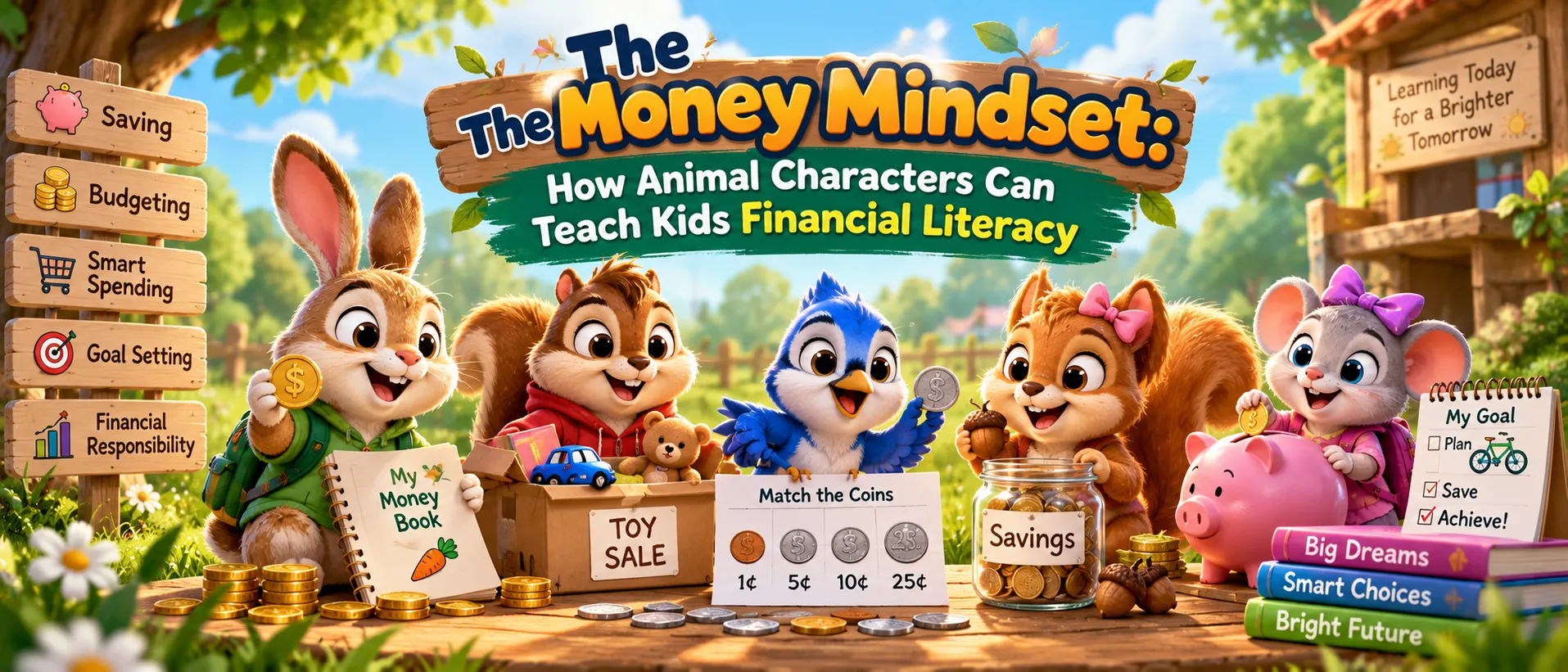
Financial literacy for kids is an important life skill that helps children understand money, develop responsible spending habits, and learn the value of saving. Introducing these concepts early can help children become more confident when making financial decisions as they grow.
But how can parents teach children about budgeting, saving, and spending without making these topics feel complicated or boring?
One engaging approach is through storytelling.
Animal characters like Benny Bunny, Charlie Chipmunk, Billy Bird, Sara Squirrel, and Mira Mouse can turn everyday money lessons into fun, memorable adventures. Through relatable stories, children can explore how money works, why planning matters, and how small decisions can help them achieve bigger goals.
By combining storytelling with practical activities, parents can make financial literacy for kids enjoyable, understandable, and relevant to everyday life.
Why Is Financial Literacy for Kids Important?
Children begin developing attitudes toward money through their everyday experiences, family conversations, and observations of the world around them. Introducing basic financial concepts gives them opportunities to understand how money is earned, saved, spent, and managed.
Developing Healthy Money Habits
Teaching children about money is not simply about helping them count coins. It also involves encouraging patience, planning, responsibility, and thoughtful decision-making.
For example, a child who learns to save a small amount toward a desired toy begins to understand that achieving a goal may require time and consistent effort.
Similarly, learning to compare prices can help children recognize that different choices have different costs.
These simple experiences provide a foundation for understanding more complex financial concepts as children grow.
Making Financial Concepts Easy to Understand
Budgeting, saving, and delayed gratification can be abstract ideas for young children. Stories make these concepts easier to explore by placing them within familiar situations.
When Benny Bunny has a limited number of carrots to buy, he must decide how to use them. When Sara Squirrel saves acorns for winter, she learns the value of preparing for future needs.
These fictional adventures give children an opportunity to think about choices and consequences in an engaging environment.
How Animal Characters Make Money Lessons More Engaging
Animal characters can make financial education more approachable by turning lessons into stories children want to follow.
Rather than simply explaining what saving means, a story can show a character working toward a goal, facing a challenge, and discovering why patience matters.
Parents can then connect the character’s experience with real-life situations, helping children explore financial concepts through conversation and practice.
Learning Through Relatable Experiences
Children may find it easier to understand a concept when they can see how it works in a story.
For example, Mira Mouse wants to buy something special but does not have enough money. She decides to save a little at a time rather than spend everything immediately.
Her experience introduces saving, goal-setting, and planning in a way children can discuss.
Parents can ask questions such as:
- What does Mira want to buy?
- How much money does she need?
- What could she do to reach her goal?
- Why might saving be better than spending everything now?
These questions encourage children to think about financial decisions instead of simply memorizing definitions.
Meet the Animal Characters Teaching Financial Literacy for Kids
Each Critter Corner character can introduce a different money concept. Together, their adventures create opportunities to explore budgeting, saving, spending, and responsible choices.
1. Benny Bunny: Learning Budgeting Basics
Benny Bunny introduces budgeting through his very own Money Book.
He counts his coins, identifies what he wants to buy, and decides how to divide his available money between different needs and goals.
His story helps children understand that money is limited and that planning can make it easier to decide how to use it.
Parents can create a simple Money Book with their children, recording:
- Money received.
- Money spent.
- Money saved.
- Money remaining.
For younger children, drawings and stickers can make the activity easier to follow. Older children can practice adding amounts and calculating what remains after a purchase.
Benny Bunny teaches an essential lesson: a budget is a plan for how to use money.
2. Charlie Chipmunk: Exploring Entrepreneurship
Charlie Chipmunk has toys he no longer uses. With help from his family, he decides to organize a small toy sale.
Through this adventure, Charlie discovers how to sort belongings, consider reasonable prices, and understand that selling an item can provide money for another goal.
His story introduces children to basic entrepreneurship, pricing, and the value of reusing items.
Parents can extend the lesson through a supervised family activity. Children might help organize suitable secondhand toys or books, while adults handle pricing, transactions, and any necessary permissions.
This experience also encourages children to think carefully about their belongings and recognize that something they no longer need may still be useful to someone else.
3. Billy Bird: Recognizing Money and Its Value
Billy Bird turns learning about currency into a matching game.
Children can practice recognizing coins, matching them to their values, and counting different amounts using play money or educational cards.
Parents can create a pretend shop where children use play money to purchase simple items.
For younger children, the focus can be on recognizing coins and matching identical values. Older children can practice adding prices, comparing amounts, and calculating simple change.
These activities make financial literacy for kids interactive while supporting early numeracy skills.
4. Sara Squirrel: Discovering the Benefits of Saving
Sara Squirrel knows that collecting acorns takes time. Instead of using everything immediately, she keeps some for the future.
Her adventure introduces the concept of saving and helps children understand that setting aside resources today can support future goals.
Parents can connect Sara’s story to a child’s own savings goal, such as buying a book, toy, or activity they enjoy.
Create a savings jar or visual progress chart and let your child mark each milestone. Discuss how regular saving brings the goal closer.
Sara Squirrel demonstrates that saving does not always require large amounts. Small contributions can gradually add up.
5. Mira Mouse: Planning a Special Purchase
Mira Mouse has her heart set on something special. Instead of buying it immediately, she learns to make a plan.
Her journey introduces several important financial skills:
- Setting a realistic savings goal.
- Understanding the price of an item.
- Deciding how much to save.
- Comparing available options.
- Practicing patience before purchasing.
Parents can help children choose a realistic goal, identify its cost, and decide how much money they can set aside over time.
Mira Mouse helps children understand that planning ahead can make larger purchases more manageable.
Five Fun Activities to Teach Financial Literacy for Kids at Home
Children can strengthen their understanding of money when they have opportunities to practice what they learn in stories.
Here are five simple activities inspired by Critter Corner’s animal characters.
1. Create a Benny Bunny Budget Jar
Take three clear jars or containers and label them Spend, Save, and Share.
Help your child understand what each category means:
- Spend: Money for purchases today.
- Save: Money kept for future goals.
- Share: Money used to help others or support a cause.
Decorate the containers with bunny ears or Benny Bunny stickers to make the activity enjoyable.
If your child receives pocket money or a small gift, discuss how they might divide it between the three jars. There is no single percentage that works for every family; the aim is to introduce the idea of making deliberate choices.
2. Organize a Charlie Chipmunk Toy Sale
With adult supervision, help your child identify gently used toys or books they no longer need.
Discuss whether each item is suitable for selling, how to choose a reasonable price, and how the money earned might be used.
Children can learn about pricing, exchanging goods, and setting financial goals. Parents should manage transactions and ensure that selling items is appropriate for the family.
3. Play Billy Bird’s Money-Matching Game
Use play money or educational cards to create a simple matching activity.
Children can match coins to their values, sort coins into groups, or use pretend money to buy items from a make-believe shop.
As their skills develop, introduce simple addition and subtraction to help them understand how purchases affect the amount of money remaining.
4. Start a Sara Squirrel Savings Challenge
Ask your child to choose something they would like to save for.
Write the target amount on a chart and divide the journey into smaller milestones. Each time your child saves, mark their progress.
Celebrate progress and discuss how small contributions can add up over time.
Keep the goal realistic so that saving feels achievable rather than frustrating.
5. Plan a Mira Mouse Big Purchase
Help your child choose a desired item and identify its price.
Together, discuss how much money is available, how much more is needed, and how saving regularly could help achieve the goal.
You can also compare similar items and talk about why price, quality, and usefulness matter.
This activity gives children practical experience with planning, comparison, and responsible spending.
How Early Money Education Supports Long-Term Financial Habits
Financial habits develop through a combination of experience, observation, family guidance, and practice. Introducing basic money concepts early gives children opportunities to explore responsible choices in age-appropriate ways.
Teaching the Difference Between Needs and Wants
One of the most useful lessons in financial literacy for kids is understanding the difference between needs and wants.
Needs include essential things such as food, basic clothing, and a safe place to live. Wants include additional items or experiences that may be enjoyable but are not essential.
Parents can introduce this distinction through everyday examples, shopping conversations, and simple sorting games.
The purpose is not to make children feel guilty about wanting things. It is to help them understand priorities and recognize that money cannot always be spent on everything they want.
Encouraging Thoughtful Spending
Children can learn to make more considered choices by comparing prices, asking whether an item is worth its cost, and thinking about what they might give up to buy it.
For example, a child deciding between two toys could compare their prices and consider which one they value more.
Parents can use these moments to explain trade-offs in simple language: choosing one option may mean waiting longer for another.
Building Confidence Through Practice
Children do not need to master every financial concept at once. They can gradually build their understanding through small, manageable decisions.
Younger children may begin by recognizing coins and sorting money. Older children can practice tracking spending, planning purchases, and managing a small allowance.
Giving children appropriate opportunities to make decisions—and discussing the outcomes without judgment—can help them become more comfortable thinking about money.
Taking Financial Literacy Beyond the Basics
Financial literacy extends beyond saving coins or purchasing toys. As children grow, they can explore more advanced ideas such as planning expenses, comparing products, understanding borrowing, and preparing for future needs.
Animal characters can help introduce these topics through imaginative situations.
For example, dinosaur characters such as Spike, Tori, and Tucker might encounter a shortage of food or other resources. Their choices could introduce conversations about planning ahead, sharing resources, and adapting when circumstances change.
Parents can connect these fictional challenges to everyday examples, such as planning supplies for a family outing or deciding how to use a limited allowance.
The goal is to help children recognize that thoughtful planning and responsible resource management are useful in many areas of life.
Help Your Child Develop a Healthy Money Mindset
Teaching financial literacy for kids does not require complicated lessons or formal classroom activities. It can begin with a favorite character, a simple story, and a conversation about an everyday decision.
Benny Bunny introduces budgeting, Charlie Chipmunk explores entrepreneurship, Billy Bird helps children recognize money, Sara Squirrel demonstrates saving, and Mira Mouse shows how planning can support a goal.
By combining stories with hands-on activities, parents can make money lessons engaging, practical, and easier to understand.
The most important thing is to keep the learning process age-appropriate, encouraging, and consistent. Children need time to explore new concepts, ask questions, and practice making decisions.
With beloved animal characters as their guides, children can take their first steps toward understanding money, making thoughtful choices, and building financial confidence—one small adventure at a time.
Frequently Asked Questions (FAQs)
1. What is financial literacy for kids?
Financial literacy for kids means helping children understand money, saving, spending, budgeting, and responsible financial decision-making. Age-appropriate stories and activities can make these concepts easier to explore.
2. Why should children learn about money at an early age?
Early financial education gives children opportunities to practice planning, saving, comparing prices, and making choices. These experiences can help establish a foundation for understanding money as they grow.
3. How can animal stories teach children financial literacy?
Animal stories introduce financial concepts through characters and situations children can relate to. Benny Bunny can demonstrate budgeting, Sara Squirrel can teach saving, and Mira Mouse can show how to plan a purchase.
4. What is the best way to teach kids about saving money?
Help children choose a realistic goal, use a savings jar, and track their progress on a visual chart. Explain how regular contributions can help them reach their goal over time.
5. How can parents teach children the difference between needs and wants?
Use everyday examples to explain that needs are essential, while wants are additional things people would like to have. Simple sorting games and shopping conversations can help children understand priorities.