
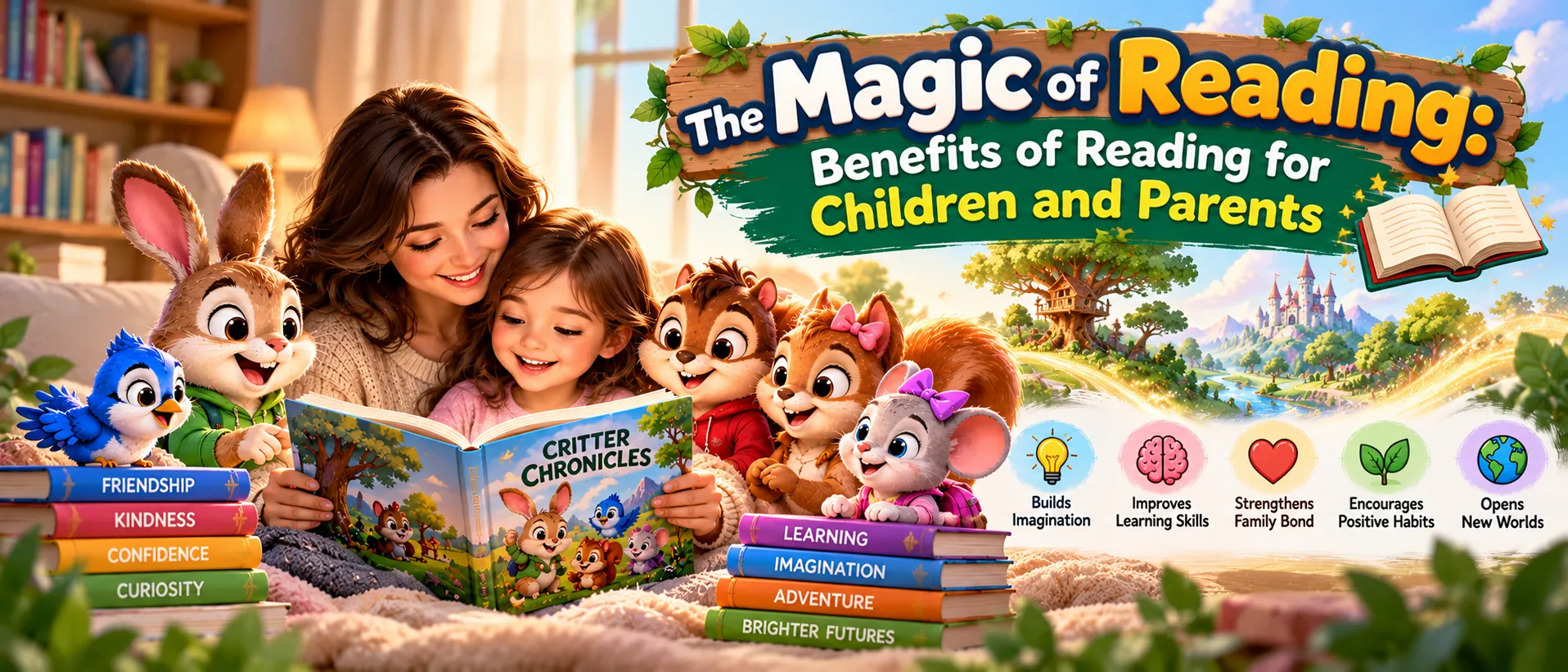
Reading is one of the most valuable gifts we can share with our children. It opens doors to new worlds, introduces us to exciting ideas, and helps us learn, imagine, and grow Benefits of Reading. From bedtime stories to colorful picture books, every reading experience can create meaningful opportunities for learning and connection.
At Critter Corner, we believe that learning should be an adventure children look forward to. Through engaging storybooks, lovable animal characters, printable resources, and educational activities, children can discover the joy of reading while developing important skills for life.
Whether you are a parent, teacher, tutor, or homeschool educator, making reading part of everyday life can help children build curiosity, confidence, and a lifelong love of learning.
Why Reading Matters for Everyone
Reading is much more than recognizing words on a page. It helps us explore ideas, understand different perspectives, and make sense of the world around us.
For children, reading provides opportunities to develop vocabulary, listening skills, comprehension, and imagination. For adults, books offer opportunities to learn new things, enjoy quiet moments, and explore different experiences and viewpoints.
Reading can also encourage empathy. When we follow a character through a challenge or experience, we have an opportunity to consider how that character might feel and why they make certain choices.
At home, sharing a story can become a simple but meaningful way for parents and children to connect. A few pages together can lead to conversations, laughter, questions, and memories that last long after the book is closed.
The Benefits of Reading for Children
Regular reading and being read to can support children’s language development, early learning, creativity, and confidence. Books also give children a welcoming way to explore unfamiliar ideas at their own pace.
Here are some important benefits of reading for children:
1. Builds Language and Vocabulary
Books introduce children to new words, expressions, and sentence structures. Listening to stories and discussing them helps children become more familiar with language and learn how to communicate their thoughts.
Picture books are especially useful for starting conversations. Parents can point to illustrations, name objects, describe actions, and encourage children to explain what they see.
2. Encourages Imagination and Creativity
Stories allow children to explore forests, oceans, distant lands, and imaginary worlds without leaving home. They can meet fascinating characters, imagine new adventures, and think about possibilities beyond their everyday experiences.
Animal stories are a wonderful way to encourage this curiosity. Children can follow a character’s journey, imagine how they would respond to a challenge, and create their own endings.
Explore Critter Chronicles and its memorable animal characters to discover stories that bring learning and imagination together.
3. Supports Listening and Comprehension
Following a story encourages children to listen carefully, remember important details, and understand how events connect.
Parents can support comprehension by asking simple questions such as:
- What happened in the story?
- Which character did you like most?
- Why do you think the character made that choice?
- What do you think might happen next?
These conversations help children practice expressing ideas and thinking about what they hear or read.
4. Builds Confidence and Curiosity
Every new word understood and every story explored gives children another opportunity to learn. Choosing books that match their interests and reading abilities can make the experience more enjoyable and help them feel comfortable exploring new ideas.
Children do not need to understand every word or read perfectly to benefit from books. Encouragement, patience, and opportunities to try again can help make reading a positive experience.
5. Introduces Important Life Lessons
Stories can help children explore kindness, friendship, courage, responsibility, teamwork, and problem-solving.
When children see characters facing challenges, they can discuss different choices and consider how those choices affect others. These conversations can help connect a story’s message to situations children encounter in everyday life.
At Critter Corner, memorable animal characters help make lessons engaging and easier to discuss. Visit the Critter Corner homepage to explore educational storybooks, games, crafts, and learning resources.
Why Reading Is Important for Babies and Young Children
It is never too early to introduce children to books. Even before babies can understand a complete story, they can enjoy hearing a familiar voice, listening to rhythms and sounds, and looking at colorful pictures.
Parents can start with simple board books, picture books, nursery rhymes, and short stories. There is no need to finish every book in one sitting. Following a baby’s attention and enjoying the moment together is what matters.
As children grow, reading can become more interactive. They may point at pictures, repeat familiar words, recognize favorite characters, or ask questions about what happens next.
These early experiences help make books a familiar and enjoyable part of childhood.
Why Parents Should Read to Their Children
Reading together is about more than the story itself. It provides an opportunity for parents and children to slow down, share attention, and enjoy time together.
A familiar bedtime story or a favorite book on a quiet afternoon can become a comforting family tradition.
Reading Together Can Help Families:
- Build stronger connections: Sharing a book creates opportunities for closeness and conversation.
- Create lasting memories: Favorite stories can become treasured parts of family life.
- Talk about feelings: Characters’ experiences can open conversations about happiness, sadness, fear, kindness, and friendship.
- Encourage a love of books: Children who see reading as an enjoyable activity may be more interested in exploring books themselves.
- Learn together: Parents and children can discover new words, ideas, places, and experiences through stories.
You do not need to be a professional storyteller to make reading special. Use different voices if you enjoy doing so, pause to look at illustrations, or simply read together in a comfortable and relaxed way.
For more insight into the educational philosophy behind these resources, visit the About Us page.
How to Make Reading Part of Everyday Life
Building a reading habit does not require hours of free time or a large home library. Small, regular reading moments can make books a natural part of family routines.
Try these practical ideas:
Keep Books Within Reach
Place age-appropriate books on low shelves, in baskets, or in a comfortable reading corner. Let children browse and choose stories that catch their attention.
Make Bedtime Reading a Routine
Choose a short story before bed to create a relaxing end to the day. If your child has a favorite book, rereading it is perfectly fine.
Visit a Library or Explore New Books
Give children opportunities to discover different subjects, illustrations, and types of stories. Allowing them to make choices can increase their interest in reading.
Talk About What You Read
Ask questions, discuss favorite characters, or connect a story to something your child has experienced. Keep the conversation natural rather than turning every story into a test.
Let Children See You Reading
Children notice the activities adults enjoy. Reading books, magazines, or other material around your child can demonstrate that reading is useful and enjoyable at every age.
Combine Reading With Hands-On Activities
Extend a story with drawing, coloring, crafts, games, or simple role-play. These activities can help children revisit the story and express their understanding creatively.
Explore Critter Corner’s educational resources for storybooks, printables, games, and activities that support learning beyond the page.
Choosing the Right Books for Your Child
The best book is one that suits your child’s age, interests, and current reading abilities.
For babies and toddlers, look for sturdy books with clear pictures, familiar objects, and simple language. Preschoolers may enjoy rhymes, repetition, animal adventures, and stories about everyday experiences.
Older children may prefer longer adventures, humorous stories, mysteries, or books that explore their favorite subjects.
Educational activity books can also make a useful addition to reading time. For example, the Animal Alphabet Coloring Book combines animal illustrations with letter recognition, tracing, and early writing practice.
When choosing books, remember that children have different interests and learning speeds. Encourage exploration without comparing one child’s reading progress with another’s.
How Critter Corner Makes Learning Through Reading Fun
At Critter Corner, we believe children can discover meaningful lessons through engaging stories, memorable characters, and opportunities to participate.
Our educational resources bring together storybooks, printable activities, games, and creative crafts to help children explore ideas in different ways.
The Critter Chronicles characters introduce children to a variety of themes and life skills through their adventures. Familiar animal friends can give families a starting point for discussing important lessons and connecting stories to real-life experiences.
Parents, teachers, tutors, and homeschool educators can explore the Critter Chronicles characters and find resources that fit children’s interests and learning goals.
Whether a child is reading a story, coloring a picture, playing an educational game, or discussing a character’s choices, every activity offers another opportunity to explore, create, and learn.
Reading Is a Gift That Lasts a Lifetime
The benefits of reading extend far beyond the final page. Books introduce children to new words, ideas, experiences, and possibilities. They give parents opportunities to connect with their children and create positive family routines.
You do not need an elaborate reading plan to get started. Choose a book that interests your child, find a comfortable place to sit, and enjoy a few pages together.
Let children ask questions, revisit favorite stories, and discover new characters at their own pace. Most importantly, help them see reading as an enjoyable part of life rather than simply another task to complete.
At Critter Corner, our goal is to make learning meaningful, memorable, and fun through educational adventures that inspire children to read, learn, play, and grow.
Every story opens a door to discovery—and every page is an opportunity to grow together.
Frequently Asked Questions (FAQs)
1. What are the main benefits of reading for children?
Reading can support children’s vocabulary, language development, listening skills, comprehension, imagination, and curiosity. Sharing stories can also create opportunities to discuss emotions, relationships, and life lessons.
2. Why is reading important for parents and children?
Reading together creates opportunities for quality time, conversation, and connection. It also allows parents to model positive reading habits and help children explore new ideas through stories.
3. When should parents start reading to their children?
Parents can begin sharing books with babies from an early age. Simple picture books, nursery rhymes, and short stories introduce babies to sounds, words, and the enjoyment of reading.
4. How can I encourage my child to enjoy reading?
Offer books that match your child’s interests, let them choose stories, read together regularly, and make the experience relaxed and enjoyable. Avoid making every reading session feel like a test.
5. How long should I read to my child each day?
There is no single ideal duration for every child. Start with a few minutes and adjust according to your child’s age, attention span, and interest. Consistent, enjoyable reading is a helpful goal.
6. What types of books are good for young children?
Picture books, animal stories, rhymes, fairy tales, and simple educational books can be suitable choices. Consider your child’s age, interests, language skills, and reading abilities when selecting books.
7. Can animal stories help children learn?
Animal stories can introduce children to new vocabulary, imaginative situations, and meaningful themes such as kindness, friendship, courage, and problem-solving. Talking about the characters can help children connect the story to everyday experiences.
8. How can parents make reading more interactive?
Invite children to describe pictures, predict what happens next, retell parts of a story, or discuss how a character feels. Drawing, coloring, and simple crafts can also extend the reading experience.
9. How can teachers and homeschool educators encourage reading?
Educators can offer varied books, create comfortable reading spaces, encourage group storytelling, and connect stories with activities and discussions. Choosing resources that support lesson goals and children’s interests can make reading more engaging.
10. Where can I find educational storybooks and reading activities for children?
Critter Corner offers educational storybooks, printable resources, games, crafts, and hands-on learning activities for families and educators. Explore the website to discover resources suited to your child’s interests and learning goals.